
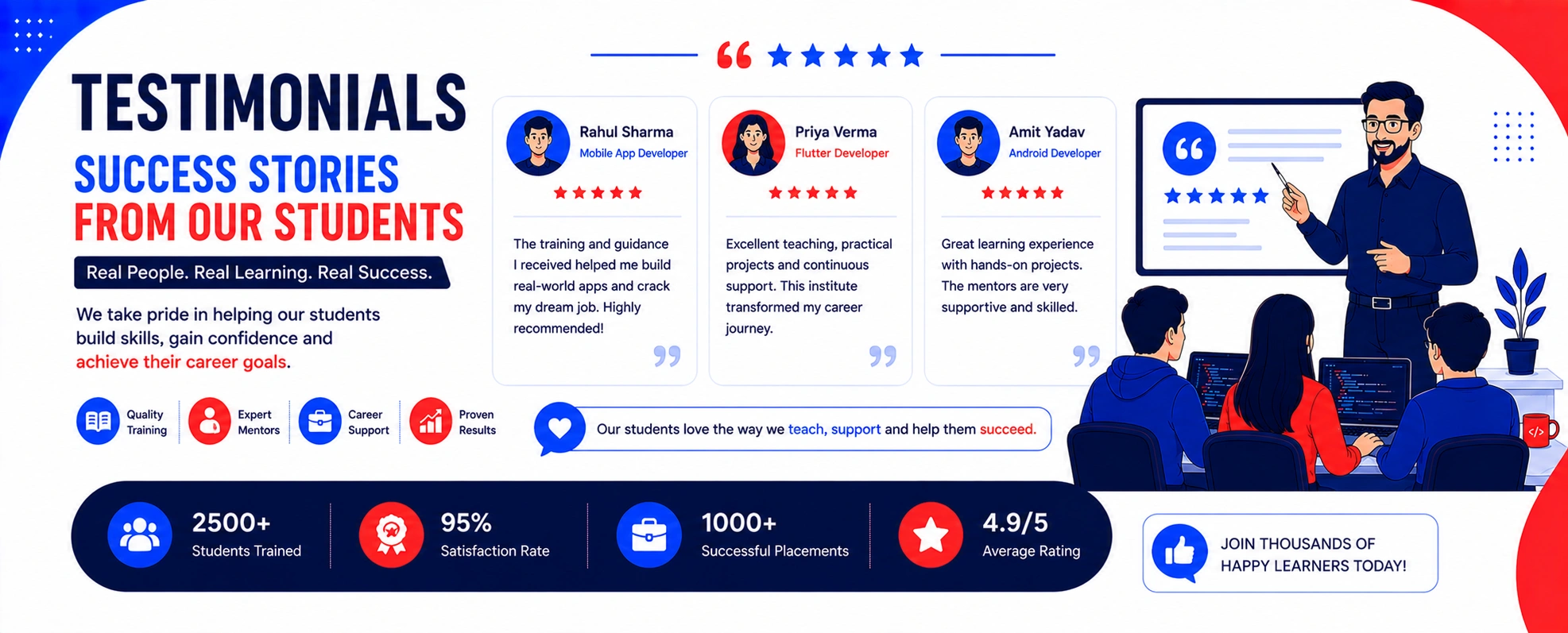
Nexozia Technologies Client Review

Testimonials FAQs
Find answers to common questions about our Testimonials FAQs, including features, benefits, pricing, and support. Explore the frequently asked questions below to learn more.
Testimonials is a service or solution designed around the specific requirements of its target users. The project scope may include planning, design, development, content or data setup, testing, deployment, and future improvements. The final features depend on the business goals, audience, workflows, and technical requirements discussed during consultation.
A properly planned testimonials solution can improve online visibility, simplify operations, support customer or user engagement, and reduce manual work where applicable. The exact benefits depend on the project type, target audience, internal processes, and required integrations. A requirement-based approach helps prioritize the features that are most useful for your organization.
Yes, the scope can be customized according to your branding, workflows, users, content, features, and future plans. Customization may include page layouts, dashboards, forms, user roles, notifications, reports, integrations, and administration tools. Before development, the requirements should be documented so that deliverables, priorities, and technical limitations are clearly understood.
Features depend on the service and the users who will operate the solution. Possible components may include responsive interfaces, admin management, search and filtering, enquiry forms, reports, notifications, user accounts, content management, payment options, or third-party integrations. A detailed feature list should be finalized after reviewing your specific business requirements.
Mobile-friendly implementation can be included for websites, portals, dashboards, and user interfaces where responsive access is required. Layouts can be planned for desktop, tablet, and mobile screens. For mobile applications, the supported platforms and device requirements should be finalized separately so the development approach matches the intended users and functionality.
Integration may be possible when the existing system provides suitable APIs, documentation, authentication methods, and access permissions. Depending on the project, integrations may involve payment gateways, communication tools, CRM or ERP systems, analytics, maps, databases, or external platforms. Technical feasibility, data security, and maintenance requirements should be reviewed before implementation.
The cost depends on the project scope, number of pages or modules, design complexity, customization, integrations, user roles, testing, hosting, and support requirements. A fixed amount should not be assumed without reviewing the requirements. A project-specific quotation can be prepared after the expected features, technology, deliverables, and priorities are discussed.
The timeline depends on the complexity of the project, content or data readiness, design approvals, integrations, revisions, testing, and deployment. A smaller project may require less time than a platform with multiple workflows, dashboards, or user roles. A practical schedule can be discussed after the scope and milestones have been finalized.
Existing websites, applications, or software can be reviewed for redesign, feature improvements, performance updates, migration, security work, or maintenance. The recommended approach depends on the current codebase, hosting environment, database, documentation, and technical condition. An initial assessment helps determine which parts can be retained and which require modification or redevelopment.
You can contact Nexozia Technologies with your requirements, reference examples, preferred features, budget range, and expected timeline. The team can review the information, clarify the project scope, and discuss suitable next steps. For enquiries in Patna, location-specific coordination can also be discussed during consultation.